Turn the key and listen. Does the engine turn over normally, struggle to turn, or do nothing at all? That is the first detail a repair shop needs when a diesel truck won’t start. A clicking sound doesn’t settle the diagnosis, and buying a starter before testing can leave you with the same problem and a new part. Secure the truck before checking anything. Write down the dash message, too, especially if it disappears between attempts. Don’t keep cranking while you decide what to do; you can run down the batteries and obscure the original fault.
First decide whether another attempt is safe
Stop trying if you notice smoke, a fuel leak, a burning smell, damaged battery cases or an unusual mechanical bang. A truck that shut down after an oil-pressure or overheating warning needs assessment before another start. Stay clear of traffic and call for help. Fire or immediate danger calls for emergency services.
If you’re safely parked and there are no danger signs, check the starting instructions in your operator manual. Confirm the required transmission position and any clutch or start-enable condition. Read the whole dashboard message. A wait-to-start light can have different meanings on different trucks.
No crank: lights come on, but the engine does not turn
The dash lights may look perfectly normal even when the batteries cannot supply enough current to crank the engine. The starter needs far more power than those lights. Weak batteries are one possibility; cable or ground resistance, the starter-control circuit and an unmet start interlock also belong on the technician’s list.
Clicking is useful information, not a parts verdict. Tell the technician whether it was one click, repeated clicking or silence, and whether the instrument panel dimmed or reset. Delco Remy explains that cable resistance can imitate starter or alternator trouble, so replacing a starter without checking its electrical supply may leave the underlying fault untouched.
Slow cranking: record the conditions
Tell the shop if the engine turns more slowly than it normally does. Mention the weather and whether this happens every time or only after the truck has been sitting. Battery condition, poor connections, the starter and mechanical resistance can all affect cranking speed. Starting successfully with a jump doesn’t tell you which of those caused the trouble.
Think back to the last normal start. Did the truck sit overnight with sleeper accessories running? Were the batteries recently worked on? Does it struggle after a hot shutdown but start normally when cold? Those details help the technician choose tests. Have qualified assistance handle a jump using the vehicle’s instructions. Never bridge starter terminals, bypass an interlock or disconnect battery cables to test the system.
Normal cranking without starting: widen the investigation
Sometimes the engine turns at its usual speed but never catches. Fuel delivery is one area to check, along with engine-control inputs, any fitted starting aids and mechanical condition. Several faults can sound alike from the driver’s seat: a restricted filter, air in the fuel supply, contaminated fuel or an injection problem. Check your fuel-level information, but don’t assume a tank reading identifies the fault.
Tell the technician about the last fuel stop, especially if the truck ran out of fuel. Include recent filter changes or work around the wiring. That history helps narrow the investigation without proving the previous repair was responsible. Leave fuel-system testing to the shop. Do not crack open high-pressure lines, use unapproved starting fluid or improvise a priming procedure.
Cold starts and start-blocked messages are model-specific
Don’t order glow plugs just because the trouble arrived with cold weather. Your diesel may not use them. Trucks differ in their starting aids and controls, and cold weather can expose a weak battery as well as fuel trouble. The temperature is a useful clue, not a diagnosis.
The Freightliner Cascadia driver manual describes configurations where a wait-to-start or start-blocked indication can relate to the instrument self-check or starter protection. That example is a reason to read your own manual, not a universal instruction for every diesel. Observe the specified cranking limits and rest periods rather than borrowing a timing rule from another engine.
What a useful no-start diagnosis should establish
The shop should first confirm the symptom you reported. A no-crank complaint calls for different tests than an engine that cranks normally but won’t fire. Battery testing and loaded cable voltage-drop checks may come first; another truck may need checks of fuel supply, cranking data or engine synchronization. A stored fault code helps choose where to look. It doesn’t automatically condemn the part named in the code.
Before approving a part, ask what test showed it was faulty. Also ask how the shop will check the repair. If the failure comes and goes, the technician may need to reproduce the original conditions. Your VIN, engine model and service records are useful here, along with a description of what happened rather than a request to replace a guessed part.
Arrange help without guessing the repair
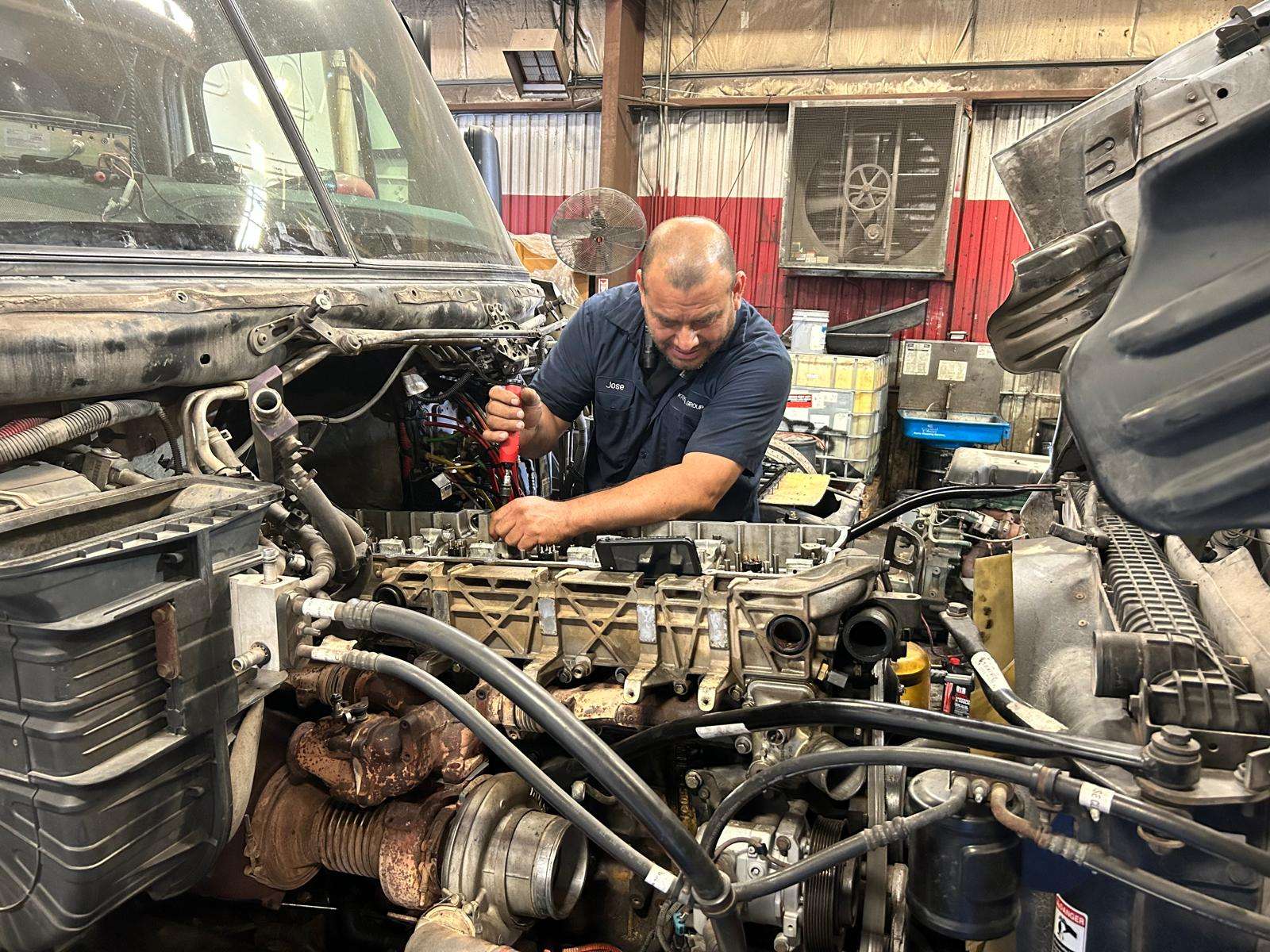
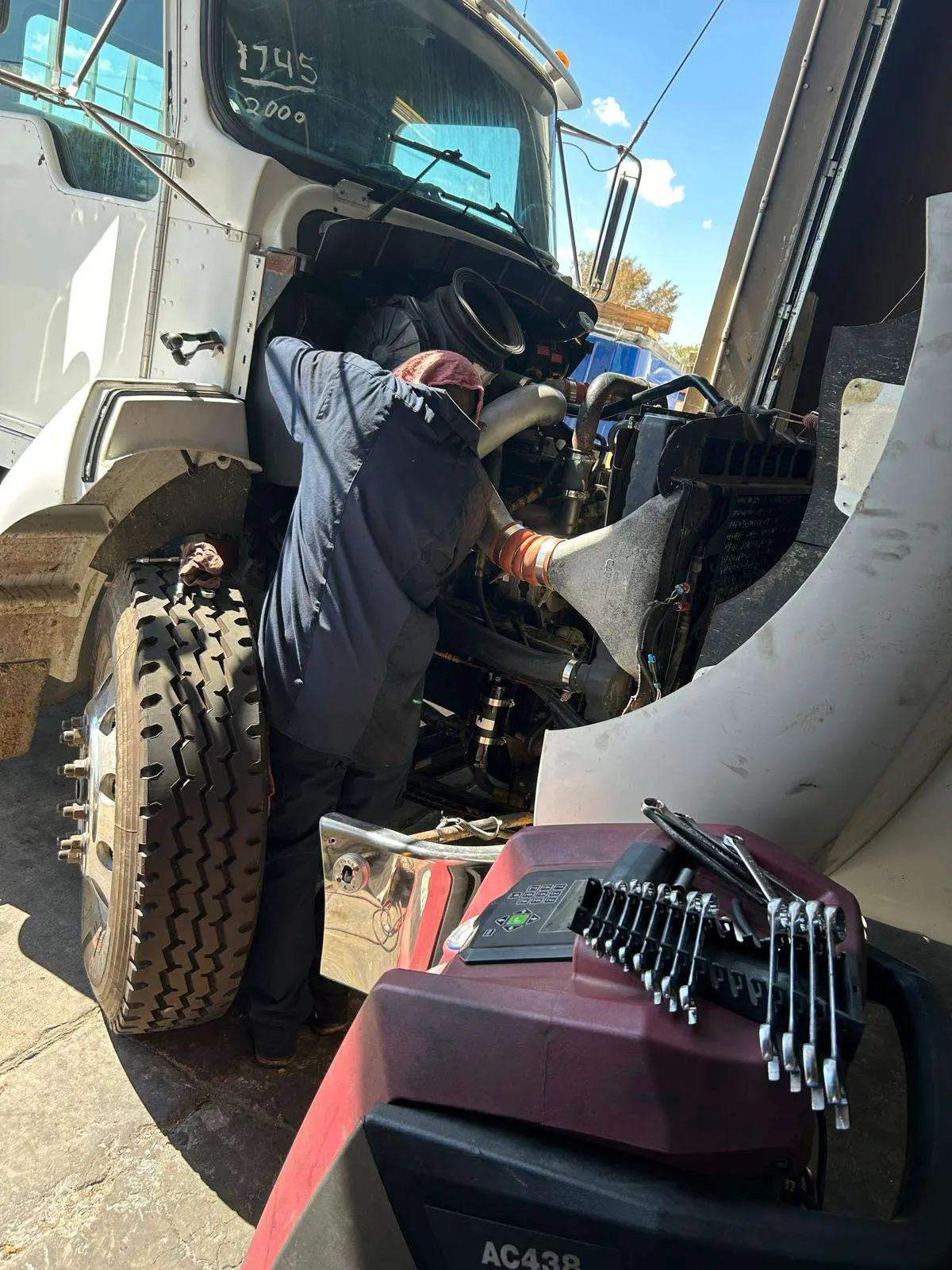
Krishna Truck & Trailer Service Center provides diesel truck repair and engine diagnostics and repair at 317 S Morgan Road, Oklahoma City, OK 73128. Shop hours are Monday through Saturday, 7 AM–10 PM; Sunday is closed.
If the truck cannot start safely, call (405) 435-1527. For advertised 24/7 emergency roadside assistance, give your exact location and confirm availability and the appropriate service option. A phone description helps plan the response but cannot establish every cause remotely.
Frequently Asked Questions
Can a diesel truck have working lights and still have weak batteries?
Yes. Lights operating normally do not prove the battery bank can supply cranking current. Battery testing and checks of the starter supply and ground paths help separate low available power from a starter or control problem.
Does clicking mean the starter needs replacement?
No. Clicking can accompany inadequate power or excessive connection resistance as well as starter-related faults. Report the sound and any dashboard dimming, but wait for testing before buying parts.
Should I keep trying if the engine cranks but will not start?
Follow the model-specific cranking limits and stop if attempts are unsuccessful. Repeated cranking can add a discharged battery or overheated starter to the original fault. Smoke, leaks or critical warnings require professional help rather than another attempt.
What information should I give the repair shop?
Provide the VIN or engine identification, exact location, dashboard messages, cranking behavior, outside conditions and recent fuel or repair history. Say whether it failed overnight, after a hot stop or while running.